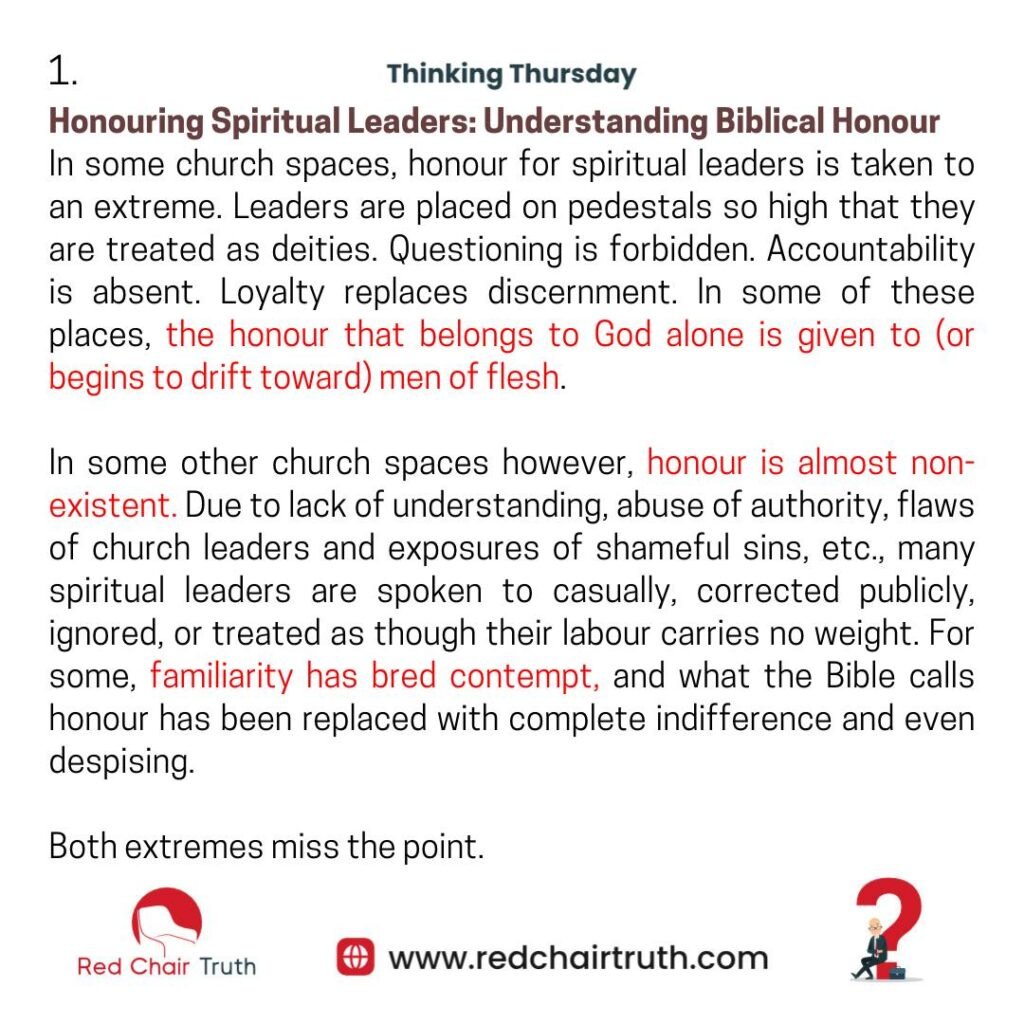
Honouring Spiritual Leaders: Understanding Biblical Honour
In some church spaces, honour for spiritual leaders is taken to an extreme. Leaders are placed on pedestals so high that they are treated as deities. Questioning is forbidden. Accountability is absent. Loyalty replaces discernment. In some of these places, the honour that belongs to God alone is given to (or begins to drift toward) men of flesh.
In some other church spaces however, honour is almost non-existent. Due to lack of understanding, abuse of authority, flaws of church leaders and exposures of shameful sins, etc., many spiritual leaders are spoken to casually, corrected publicly, ignored, or treated as though their labour carries no weight. For some, familiarity has bred contempt, and what the Bible calls honour has been replaced with complete indifference and even despising.
Both extremes miss the point.
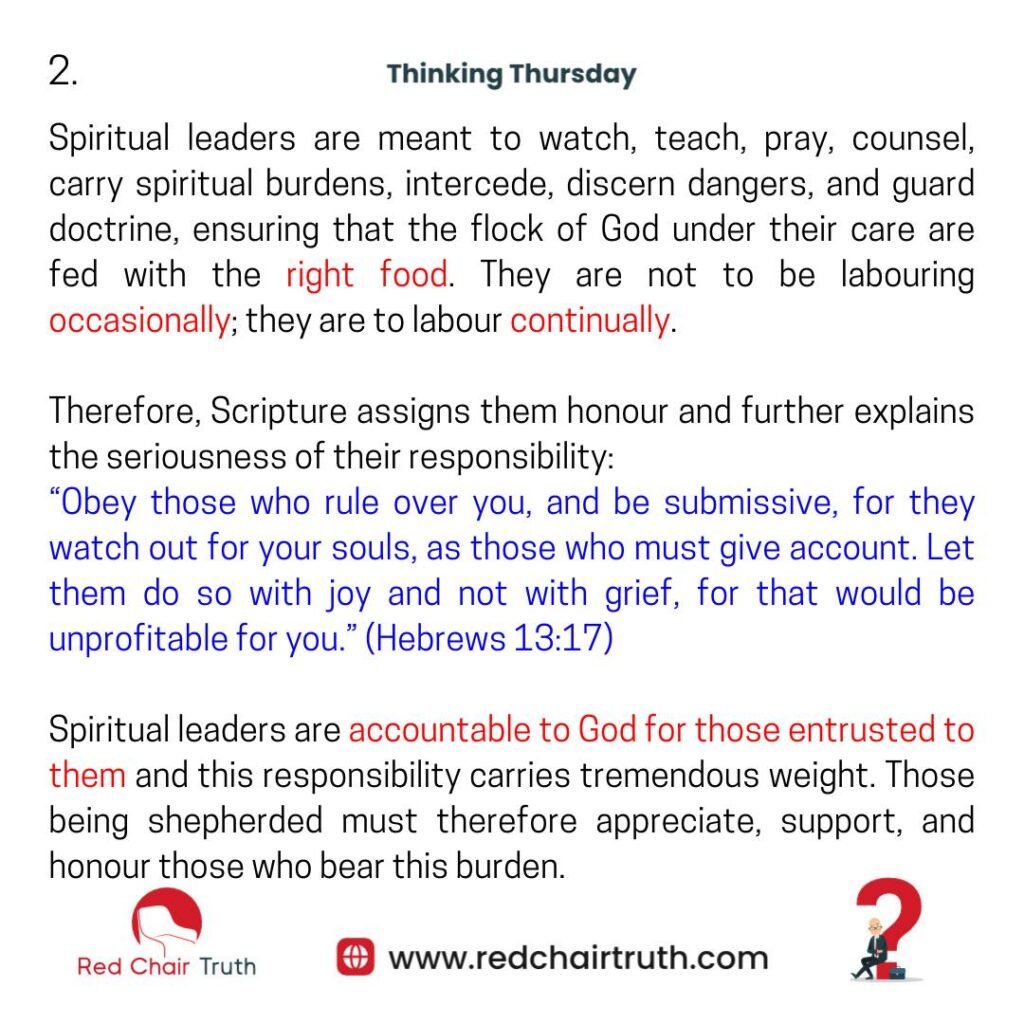
Spiritual leaders are meant to watch, teach, pray, counsel, carry spiritual burdens, intercede, discern dangers, and guard doctrine, ensuring that the flock of God under their care are fed with the right food. They are not to be labouring occasionally; they are to labour continually.
PREVIOUS: HONOUR (PART 14)
Scriptural References
Scripture assigns them honour and further explains the seriousness of their responsibility:
“Obey those who rule over you, and be submissive, for they watch out for your souls, as those who must give account. Let them do so with joy and not with grief, for that would be unprofitable for you.” (Hebrews 13:17)
Spiritual leaders are accountable to God for those entrusted to them and this responsibility carries tremendous weight. Those being shepherded must therefore appreciate, support, and honour those who bear this burden.
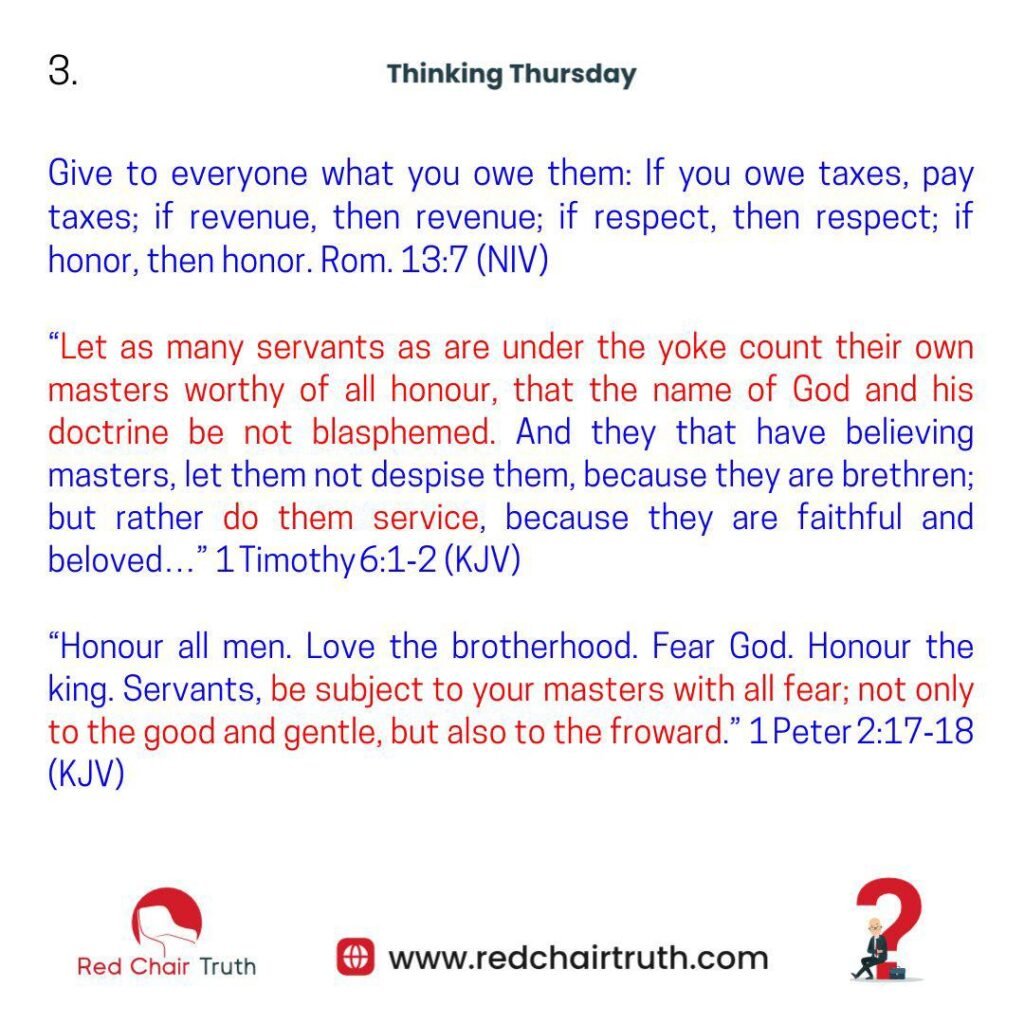
Give to everyone what you owe them: If you owe taxes, pay taxes; if revenue, then revenue; if respect, then respect; if honor, then honor. Rom. 13:7 (NIV)
“Let as many servants as are under the yoke count their own masters worthy of all honour, that the name of God and his doctrine be not blasphemed. And they that have believing masters, let them not despise them, because they are brethren; but rather do them service, because they are faithful and beloved…” 1 Timothy 6:1-2 (KJV)
“Honour all men. Love the brotherhood. Fear God. Honour the king. Servants, be subject to your masters with all fear; not only to the good and gentle, but also to the froward.” 1 Peter 2:17-18 (KJV)
READ ALSO: SUBMISSION IN MARRIAGE (PART 1)
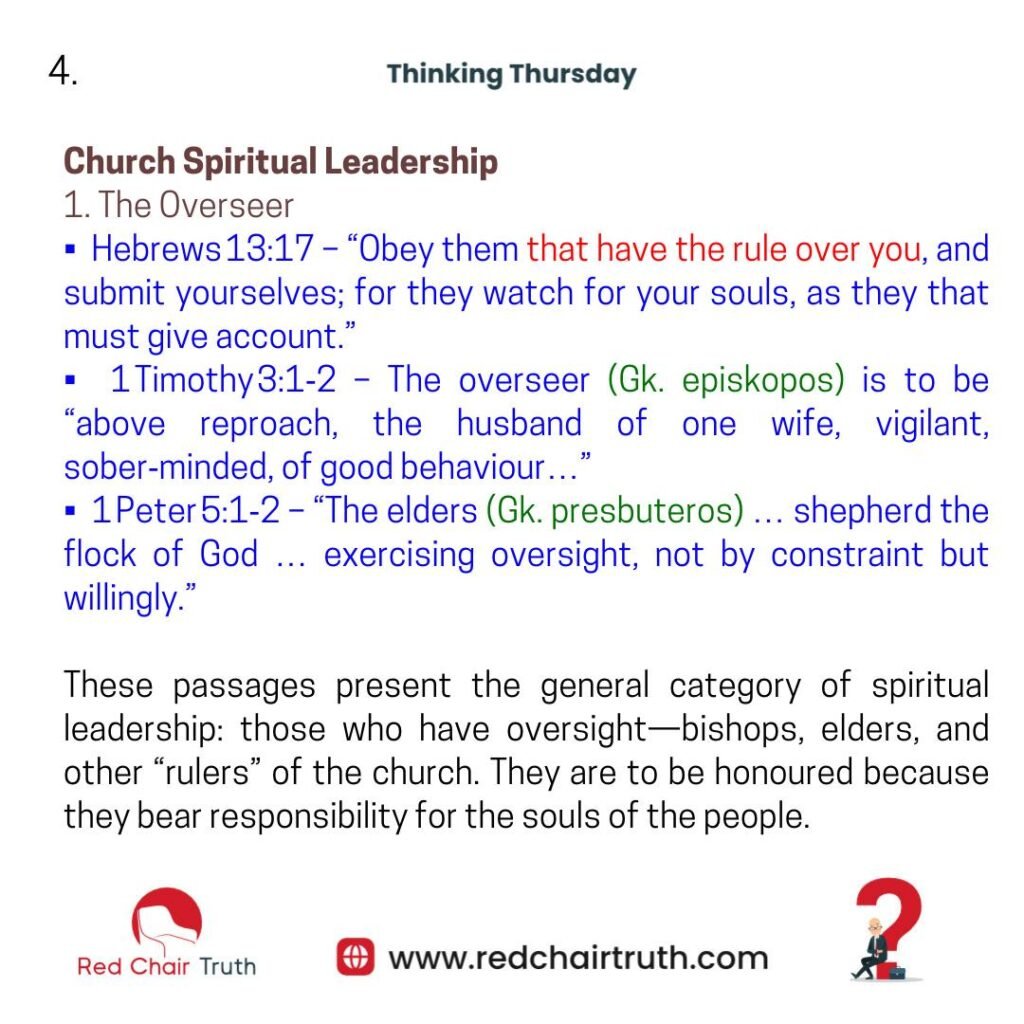
Church Spiritual Leadership
1. The Overseer
- Hebrews 13:17 – “Obey them that have the rule over you, and submit yourselves; for they watch for your souls, as they that must give account.”
- 1 Timothy 3:1-2 – The overseer (Gk. episkopos) is to be “above reproach, the husband of one wife, vigilant, sober-minded, of good behaviour…”
- 1 Peter 5:1-2 – “The elders (Gk. presbuteros) … shepherd the flock of God … exercising oversight, not by constraint but willingly.”
These passages present the general category of spiritual leadership: those who have oversight—bishops, elders, and other “rulers” of the church. They are to be honoured because they bear responsibility for the souls of the people.
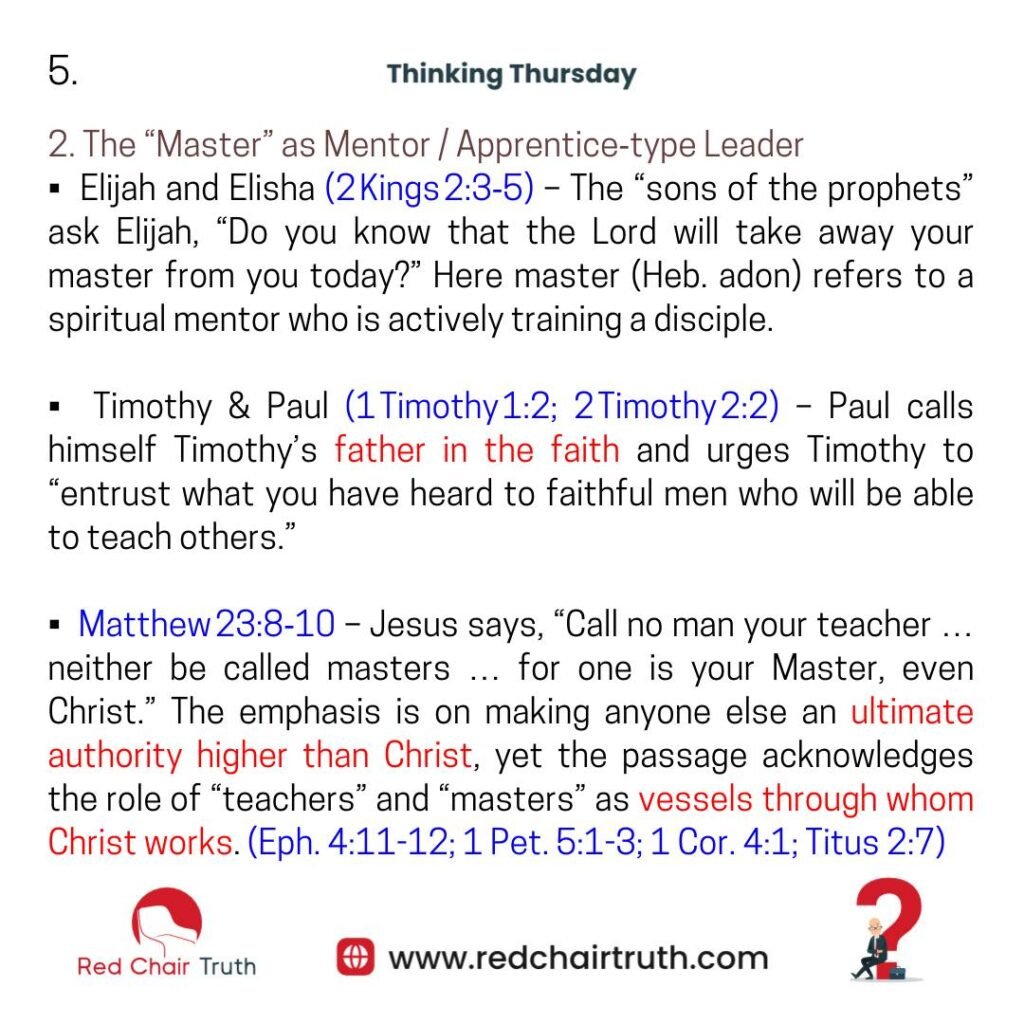
2. The “Master” as Mentor/Apprentice-type Leader
- Elijah and Elisha (2 Kings 2:3-5) – The “sons of the prophets” ask Elijah, “Do you know that the Lord will take away your master from you today?” Here master (Heb. adon) refers to a spiritual mentor who is actively training a disciple.
- Timothy & Paul (1 Timothy 1:2; 2 Timothy 2:2) – Paul calls himself Timothy’s father in the faith and urges Timothy to “entrust what you have heard to faithful men who will be able to teach others.”
- Matthew 23:8-10 – Jesus says, “Call no man your teacher … neither be called masters … for one is your Master, even Christ.” The emphasis is on making anyone else an ultimate authority higher than Christ, yet the passage acknowledges the role of “teachers” and “masters” as vessels through whom Christ works. (Eph. 4:11-12; 1 Pet. 5:1-3; 1 Cor. 4:1; Titus 2:7)
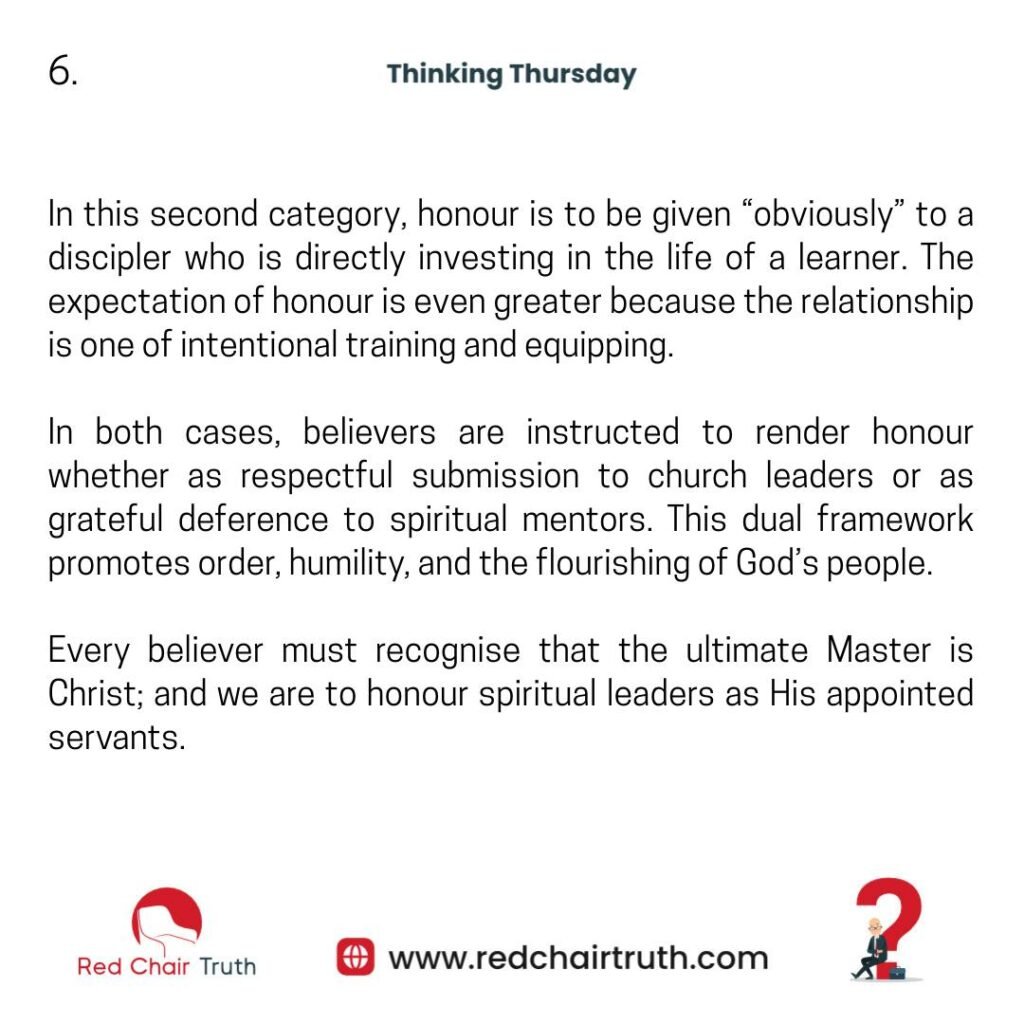
In this second category, honour is to be given “obviously” to a discipler who is directly investing in the life of a learner. The expectation of honour is even greater because the relationship is one of intentional training and equipping.
In both cases, believers are instructed to render honour whether as respectful submission to church leaders or as grateful deference to spiritual mentors. This dual framework promotes order, humility, and the flourishing of God’s people.
Every believer must recognise that the ultimate Master is Christ; and we are to honour spiritual leaders as His appointed servants.
READ NEXT: HONOUR (PART 16)