Last time, we saw that honour involves spiritual submission to the authority God has placed over us and grateful deference to spiritual mentors, which promotes order, humility and the flourishing of God’s people.
But what does honour for spiritual authorities and mentors look like practically?
Honour by Physical and Material Support
An essential expression of honour is providing for spiritual authorities materially. Honour is not limited to greeting, bowing, or showing public respect. It is giving, sharing resources, and meeting the practical needs of spiritual leaders. Where there has been spiritual investment, Scripture expects material participation.
PREVIOUS ESPOSIDE: HONOUR (PART 15)
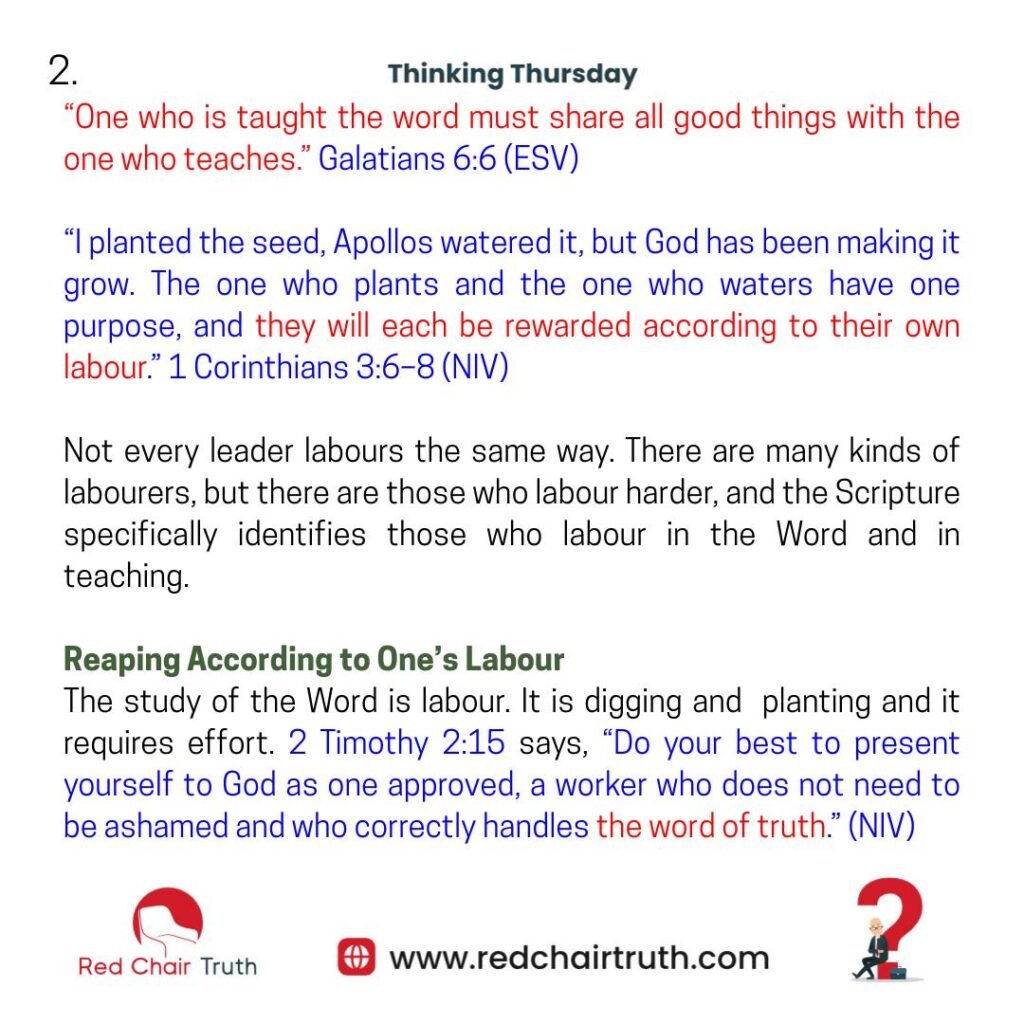
Spiritual Sowers Deserve Material Harvest
“If we have sown spiritual things for you, is it a great thing if we reap your material things?” 1 Corinthians 9:11 (NKJV)
“One who is taught the word must share all good things with the one who teaches.” Galatians 6:6 (ESV)
“I planted the seed, Apollos watered it, but God has been making it grow. The one who plants and the one who waters have one purpose, and they will each be rewarded according to their own labour.” 1 Corinthians 3:6–8 (NIV)
Not every leader labours the same way. There are many kinds of labourers, but there are those who labour harder, and the Scripture specifically identifies those who labour in the Word and in teaching.
Reaping According to One’s Labour
The study of the Word is labour. It is digging and planting and it requires effort. 2 Timothy 2:15 says, “Do your best to present yourself to God as one approved, a worker who does not need to be ashamed and who correctly handles the word of truth.” (NIV)
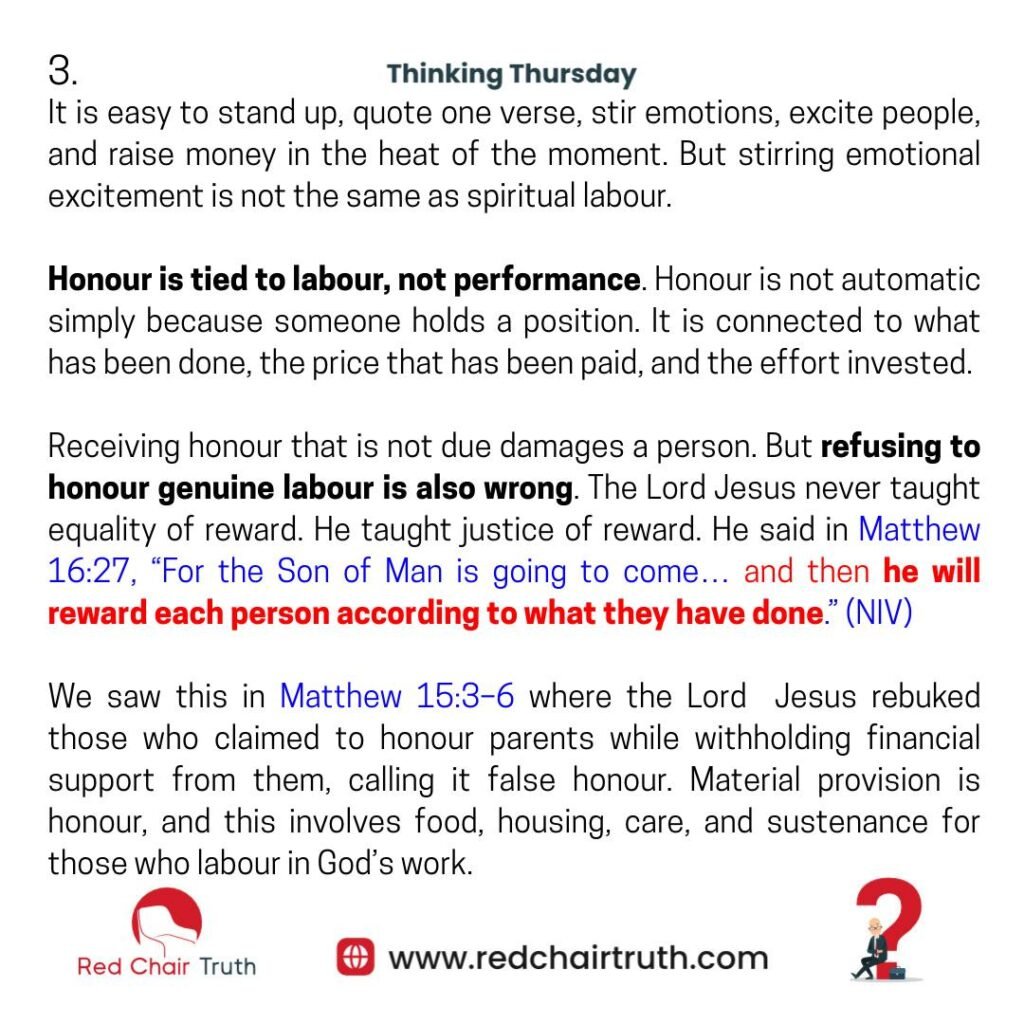
It is easy to stand up, quote one verse, stir emotions, excite people, and raise money in the heat of the moment. But stirring emotional excitement is not the same as spiritual labour.
Honour is tied to labour, not performance. Honour is not automatic simply because someone holds a position. It is connected to what has been done, the price that has been paid, and the effort invested.
Receiving honour that is not due damages a person. But refusing to honour genuine labour is also wrong. The Lord Jesus never taught equality of reward. He taught justice of reward. He said in Matthew 16:27, “For the Son of Man is going to come… and then he will reward each person according to what they have done.” (NIV)
Material Provision is Honour
We saw this in Matthew 15:3–6 where the Lord Jesus rebuked those who claimed to honour parents while withholding financial support from them, calling it false honour. Material provision is honour, and this involves food, housing, care, and sustenance for those who labour in God’s work.
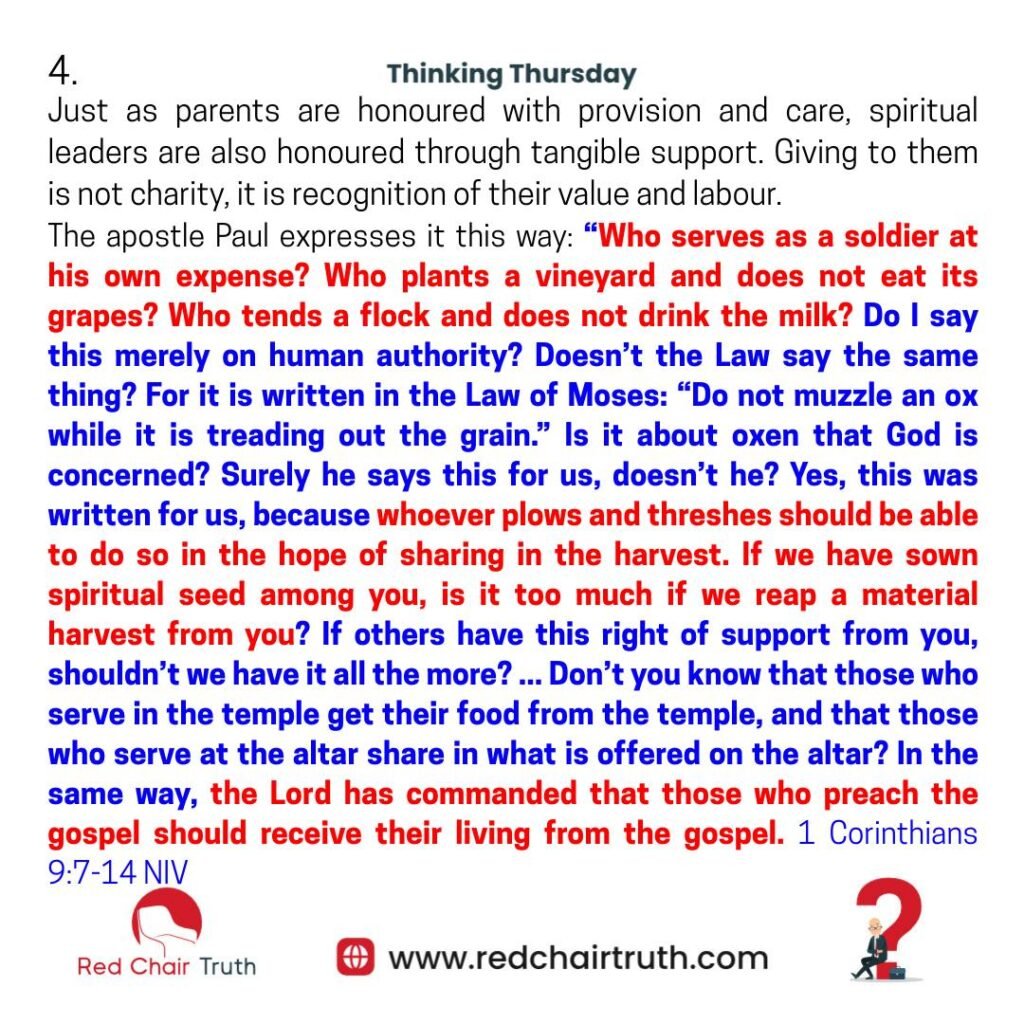
Just as parents are honoured with provision and care, spiritual leaders are also honoured through tangible support. Giving to them is not charity, it is recognition of their value and labour.
The apostle Paul expresses it this way: “Who serves as a soldier at his own expense? Who plants a vineyard and does not eat its grapes? Who tends a flock and does not drink the milk? Do I say this merely on human authority? Doesn’t the Law say the same thing? For it is written in the Law of Moses: “Do not muzzle an ox while it is treading out the grain.” Is it about oxen that God is concerned? Surely he says this for us, doesn’t he? Yes, this was written for us, because whoever plows and threshes should be able to do so in the hope of sharing in the harvest. If we have sown spiritual seed among you, is it too much if we reap a material harvest from you? If others have this right of support from you, shouldn’t we have it all the more? … Don’t you know that those who serve in the temple get their food from the temple, and that those who serve at the altar share in what is offered on the altar? In the same way, the Lord has commanded that those who preach the gospel should receive their living from the gospel. 1 Corinthians 9:7-14 NIV
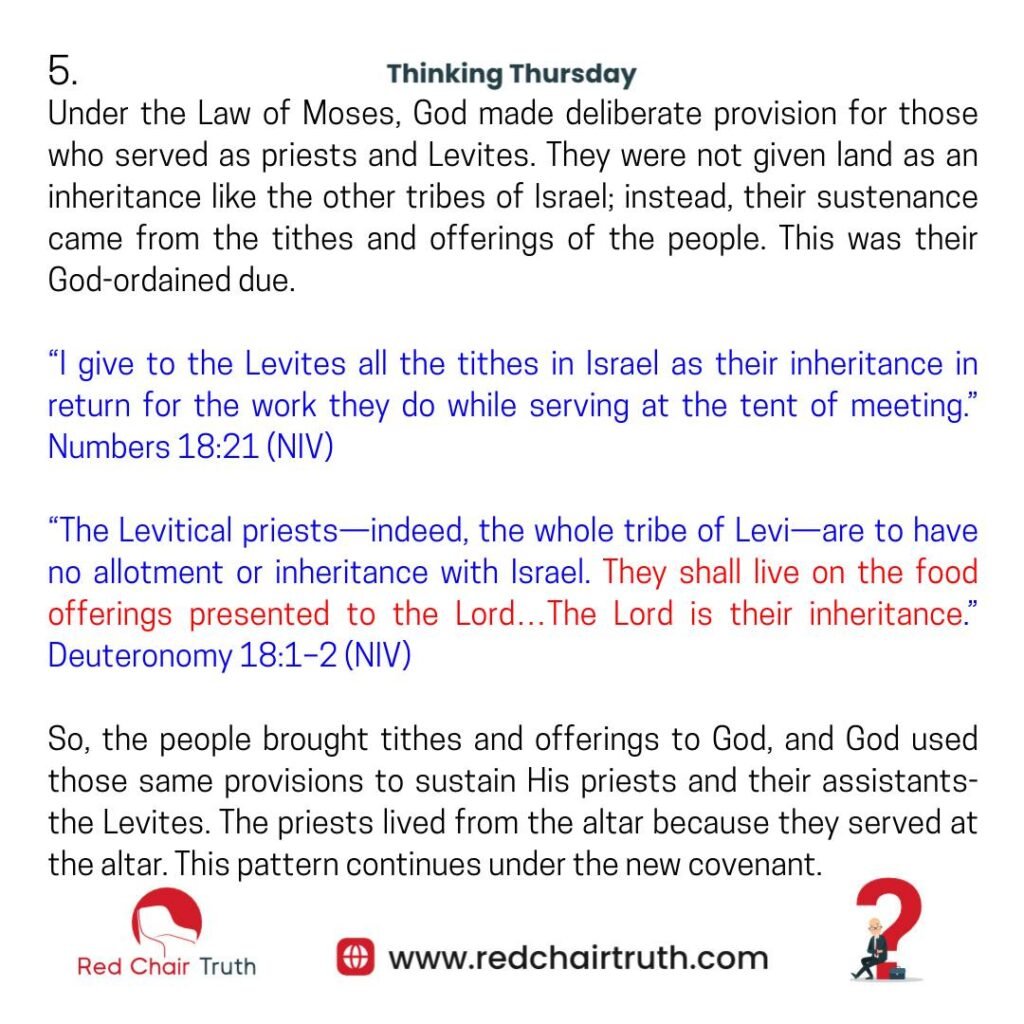
From the Law of Moses
Under the Law of Moses, God made deliberate provision for those who served as priests and Levites. They were not given land as an inheritance like the other tribes of Israel; instead, their sustenance came from the tithes and offerings of the people. This was their God-ordained due.
“I give to the Levites all the tithes in Israel as their inheritance in return for the work they do while serving at the tent of meeting.” Numbers 18:21 (NIV)
“The Levitical priests—indeed, the whole tribe of Levi—are to have no allotment or inheritance with Israel. They shall live on the food offerings presented to the Lord…The Lord is their inheritance.” Deuteronomy 18:1–2 (NIV)
So, the people brought tithes and offerings to God, and God used those same provisions to sustain His priests and their assistants—the Levites. The priests lived from the altar because they served at the altar. This pattern continues under the new covenant.
Those who labour spiritually among God’s people have a right to be supported by them. God is pleased when this happens.
READ ALSO: TRUSTING GOD: THE FOOD AND CLOTHING PROMISE (PART 1)
Lessons From The Philippian Church
In Philippians 4:15–19, Paul commended the Philippian church because they understood honour. He said that when the other churches did not support him, they did. They gave again and again, not because Paul was begging, but because they recognized the value of his labour among them.
Paul explained that he was not seeking the gift itself, but the fruit that abounds to their account, and he described their giving as “a sweet-smelling aroma, an acceptable sacrifice, well pleasing to God.” In other words, honour offered to God’s servants rise as worship to God Himself.
When many believers quote the passage, “My God shall supply all your need according to His riches in glory by Christ Jesus,” (Phil. 4:19) they do not realize that promise was spoken in response to honour Paul received for spiritual labour he rendered.
This was what the apostle Paul expressed in 1 Corinthians 9:13–14 and reinforces in 1 Timothy 5:17–18
“The elders who direct the affairs of the church well are worthy of double honor, especially those whose work is preaching and teaching. For Scripture says, ‘Do not muzzle an ox while it is treading out the grain,’ and, ‘The worker deserves his wages.’” (NIV)
Join us next week, as we examine the concept of ‘Double Honour’.
READ NEXT: HONOUR (PART 17)