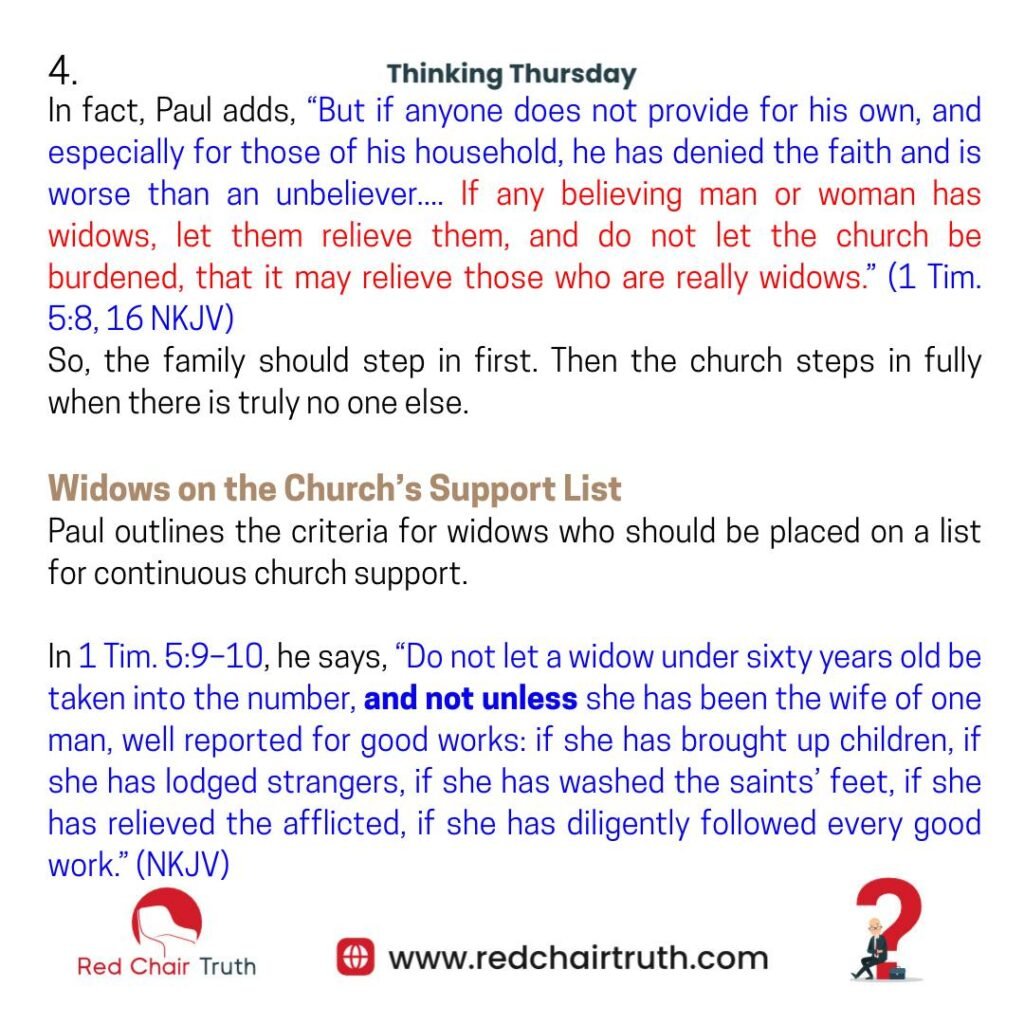
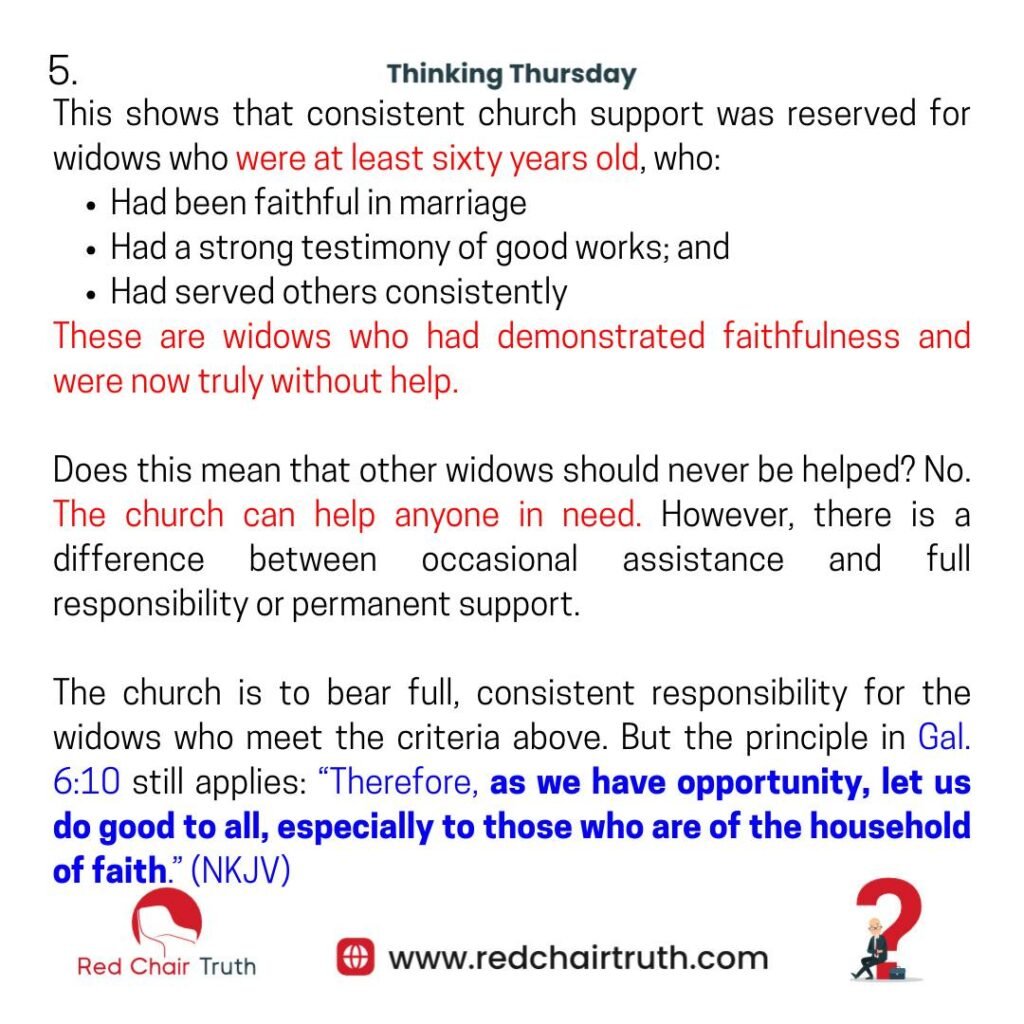
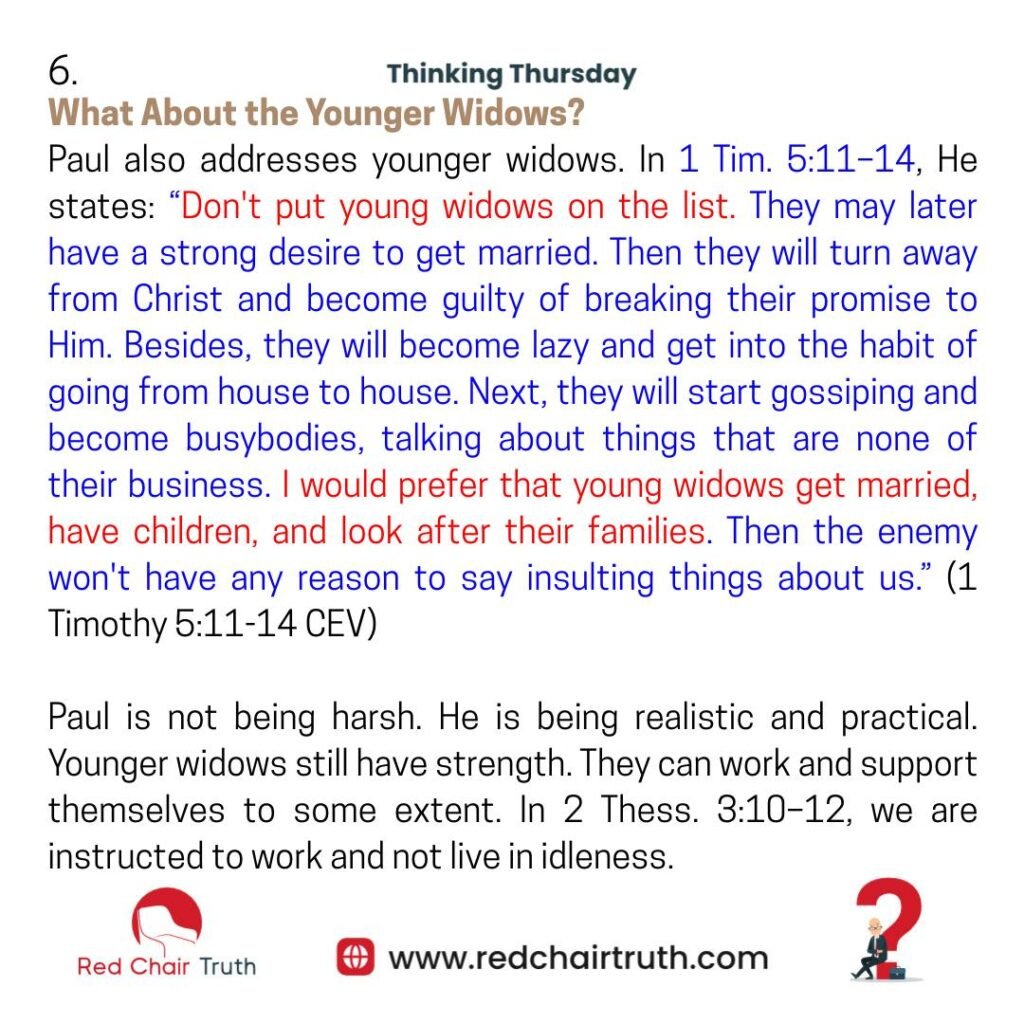
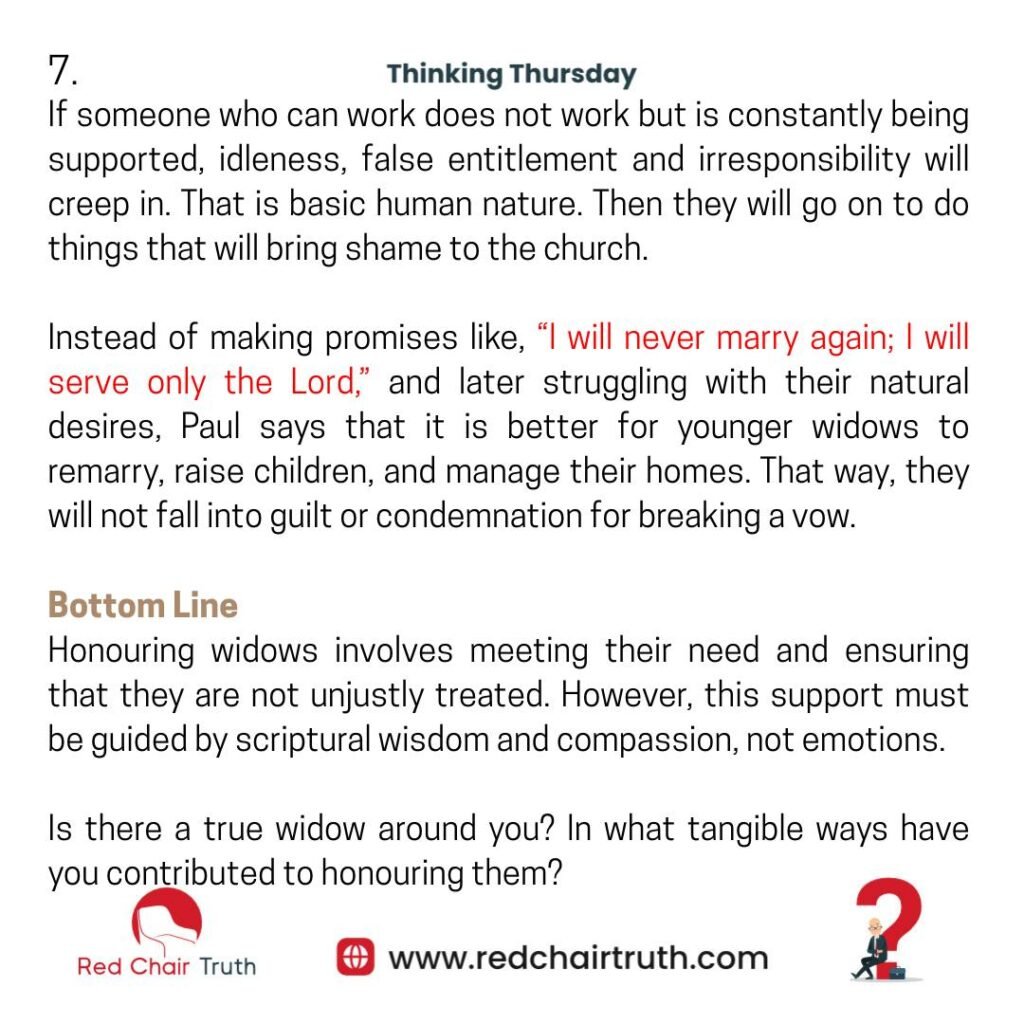
Honouring Widows
When a woman loses her husband, the pain is heavy. A lot of times, the tears you see is not just the woman being emotional. Many times, they carry questions like: “How will I survive? How will I raise my children without a father? What will life look like without him?”
God understands that kind of pain.
That’s why in the Law, He spoke about widows and made provisions for them to be cared for. In the New Testament, the apostle Paul also instructs that widows should be honoured.
But when you hear the words “honour widows,” what comes to mind? Pity? A little help once in a while? Occasional visits? How do we help widows in a way that truly reflects God’s heart?
Put on your thinking cap as we turn to the Scriptures for answers.
PREVIOUS: HONOUR (PART 22)
When the Man of the House Dies…
In Bible times, the loss of a husband affects the structure of provision, protection and stability in a home. In those societies, men were typically the primary breadwinners and providers for their families. The women worked too, but the men did the harder, sweatier work.
With their strength, they cultivated the land, and they were also the ones who went to war. In those days, wars were frequent, and the men often went to war and came back home with spoils of war: gold, silver and other forms of wealth.
Now, there are times where the man goes to war and does not return. The woman is left alone with her children, without provision or protection. In many cases, she would be unable to farm the land and handle all the aspects of keeping a home by herself. She would be vulnerable and needy.
The husband was not only the provider but also the defender and covering of the household in a very real sense. When he dies, the widow often loses both economic security and physical protection.
Because of this, God commanded His people to care for them and not to afflict them. He declared Himself to be their defender and warned that that He will defend their cause if society mistreats them.
They Are Not to Be Neglected or Mistreated
You shall not mistreat any widow or fatherless child. If you do mistreat them, and they cry out to me, I will surely hear their cry, and my wrath will burn, and I will kill you with the sword, and your wives shall become widows and your children fatherless. (Exo. 22:22-24 ESV).
He executes justice for the fatherless and the widow, and loves the sojourner, giving him food and clothing. (Deut. 10:18 ESV)
He is a father to the fatherless and an advocate for widows. God rules from his holy palace. (Psa. 68:5 NET)
Then I will draw near to you for judgment. I will be a swift witness…against those who oppress…the widow and the fatherless, against those who thrust aside the sojourner, and do not fear me, says the LORD of hosts. (Mal. 3:5 ESV)
A Specially Protected Group
Under the Law of Moses, the Lord gave some provisions to ensure that the widows were cared for and protected. They are:
#1. The Levirate Marriage (Deuteronomy 25:5-10)
Under the Law, if a married man died without a son, his brother or close kinsman was to marry the widow.
This ensured her protection, provision, and the continuation of her late husband’s lineage. This arrangement particularly applied to younger widows.
This was how Naomi, who was a widow herself, arranged for Ruth, her son’s widow, to be cared for.
Then Naomi her mother-in-law said to Ruth, My daughter, shall I not seek rest or a home for you, that you may prosper? (Ruth 3:1 AMP). Ruth followed Naomi’s instructions and ended up marrying Boaz, a close relative of her late husband (See Ruth 3 & 4).
READ ALSO: IS THE LAW OBSOLETE? (PART 1-3)
#2. Laws of Gleaning
“When you reap your harvest in your field and forget a sheaf in the field, you shall not go back to get it. It shall be for the sojourner, the fatherless, and the widow, that the LORD your God may bless you in all the work of your hands…
When you beat your olive trees, you shall not go over them again. It shall be for the sojourner, the fatherless, and the widow. When you gather the grapes of your vineyard, you shall not strip it afterward. It shall be for the sojourner, the fatherless, and the widow. You shall remember that you were a slave in the land of Egypt; therefore I command you to do this. (Deut. 24:19-22 ESV. See also Leviticus 19:9-10)
Farmers were commanded not to harvest their fields completely so widows (along with orphans, the poor and the strangers) could gather what remained for food. This gave widows a means of sustenance. This was how Ruth met Boaz first, before she married him.
ALSO READ: CHANGING GOD?
#3. Tithes for the Needy
Every third year, a special tithe was set aside within the towns for the Levite, the stranger, the fatherless, and the widow so that they would not lack.
At the end of every three years you shall bring out all the tithe of your produce in the same year and lay it up within your towns. And the Levite, because he has no portion or inheritance with you, and the sojourner, the fatherless, and the widow, who are within your towns, shall come and eat and be filled, that the LORD your God may bless you in all the work of your hands that you do. (Deut. 14:28-29 ESV. See also Deut. 26:12)
From these, we see that God’s care for widows was not random, it was deliberate. He built provisions for them into the structure of the community, making it clear that widows are to be provided for and protected under His watchful care.
The Lord even went beyond the legal provisions and supernaturally provided for widows through His prophets at different points in Scripture.
In 1 Kings 17:8-16, during a season of severe famine, God sent Elijah to a widow at Zarephath who had only a handful of flour and a little oil left. As she obeyed the prophet in faith, God miraculously sustained her and her son. The flour did not run out and the oil did not fail throughout the famine.
Then in 2 Kings 4:1-7, God intervened for the widow of one of the sons of the prophets who faced the loss of her sons due to her late husband’s debts. She sought Elisha’s help and he instructed her to pour the oil she had in a small jar into borrowed vessels. God caused the oil to multiply until it filled all the vessels, enabling her to pay her debts and live on the rest.
Now that we’ve seen how God honoured widows under the Law, join us next week as we discover how these principles still speak today and how we can intentionally reflect God’s heart toward the widows around us.
READ NEXT: HONOUR (PART 24)