HONOUR BY UPHOLDING THEIR INTEGRITY
We’ve discussed honoring our spiritual leaders through obedience and material support, but what about the words we speak about them?
Ever had a moment at home where members of your family gather to gossip and criticize a church leader; yet the next day, you are all at church with smiles, tithes, and gifts, pretending nothing happened?
What about when there is actual truth in the rumours? In an age of exposure, where the hidden sins of leaders, including decades-old secrets, come to light, how should we respond?
Sharing material provisions is one thing, but what about our words? How much do they matter? Let’s find out God’s thoughts on these.
PREVIOUS: HONOUR (PART 18)
Casual Words, Serious Judgments…
“I tell you, on the day of judgment people will give account for every careless word they speak, for by your words you will be justified, and by your words you will be condemned.” (Matthew 12:36-37, ESV)
The Bible tells us that we will be judged for careless and idle words that we speak, and this covers everything from gossip to words said in jest. It means you don’t speak carelessly or engage in gossip about anybody, and you don’t spread information that is false, exaggerated, or simply unconfirmed.
This is something I emphasize strongly to the members of our congregation. If someone brings a gossip to you, don’t entertain it casually. Verify the claims. Say, “I’m going to call the person you just mentioned and confirm this story you told me.”
That alone usually tells you whether it’s the truth or just talk. And this principle applies even more strictly when it concerns leaders.
READ ALSO: SUBMISSION IN MARRIAGE (PART 2)
The Importance of Witnesses
You don’t say things about your spiritual leader that build rebellion in the hearts of others, especially without confirmation. 1 Tim. 5:19 says, “Do not admit a charge against an elder except on the evidence of two or three witnesses.” This means that you are not to listen to any accusation against a church leader, unless at least two or three people bring the same charges. God does not treat accusations lightly, especially against those He has placed in authority.
Notice that Paul did not say, “Ignore every accusation.” He also did not say, “Believe every accusation.” What he gave was a process, because God cares about both truth and order.
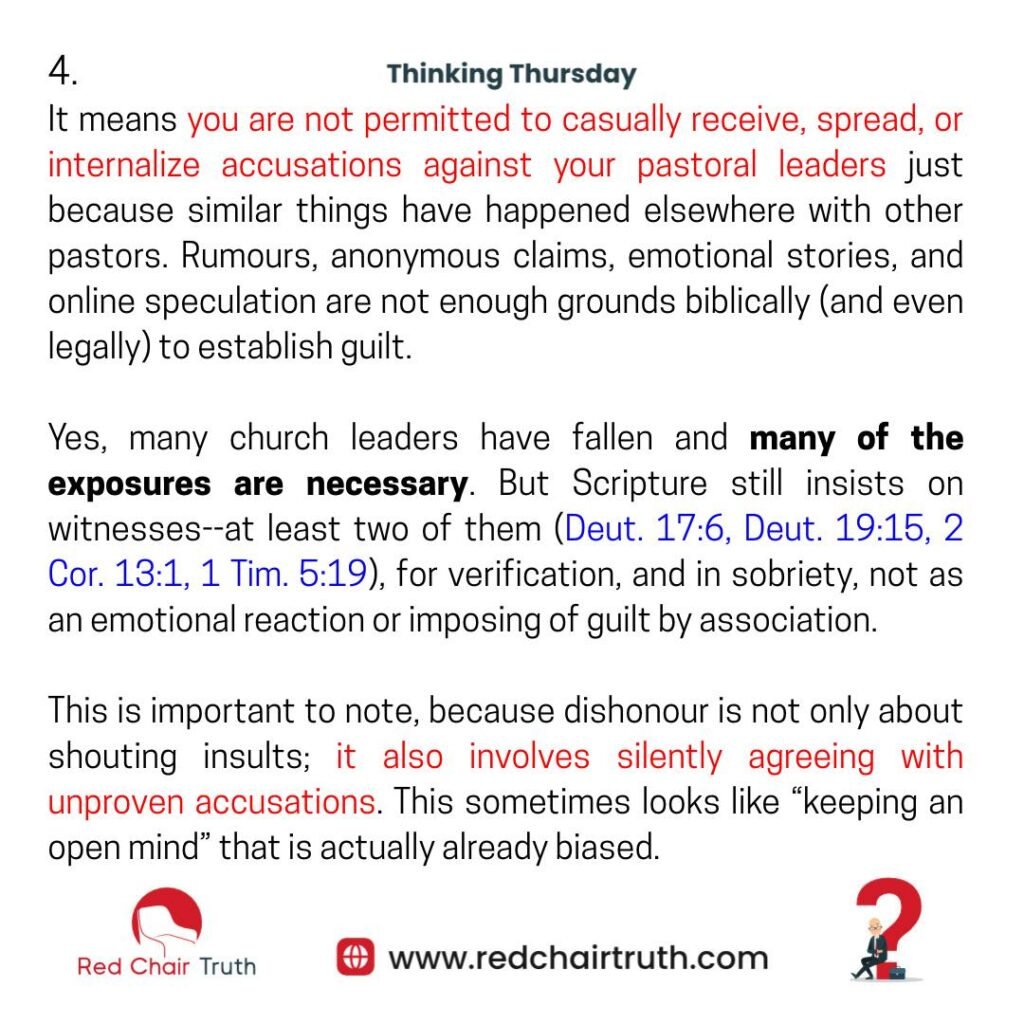
It means you are not permitted to casually receive, spread, or internalize accusations against your pastoral leaders just because similar things have happened elsewhere with other pastors. Rumours, anonymous claims, emotional stories, and online speculation are not enough grounds biblically (and even legally) to establish guilt.
Yes, many church leaders have fallen and many of the exposures are necessary. But Scripture still insists on witnesses–at least two of them (Deut. 17:6, Deut. 19:15, 2 Cor. 13:1, 1 Tim. 5:19), for verification, and in sobriety, not as an emotional reaction or imposing of guilt by association.
This is important to note, because dishonour is not only about shouting insults; it also involves silently agreeing with unproven accusations. This sometimes looks like “keeping an open mind” that is actually already biased.
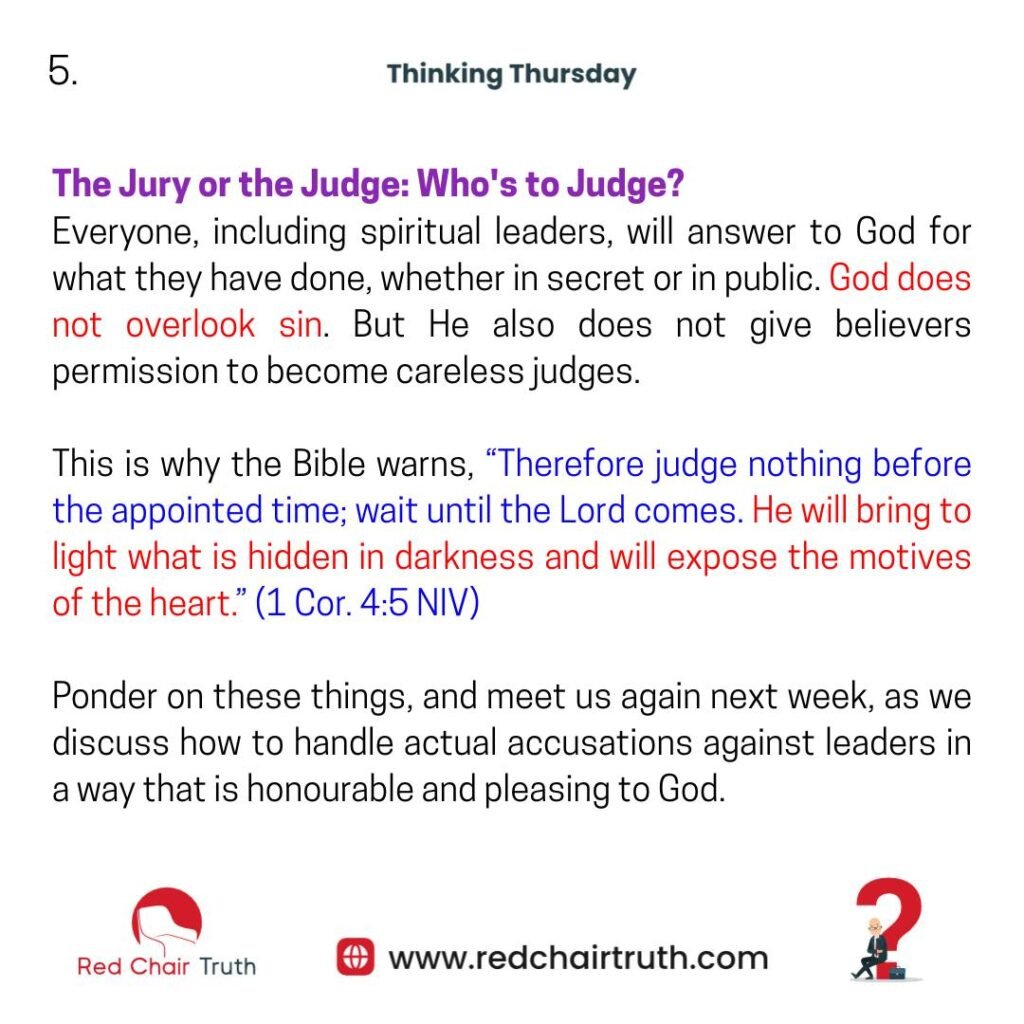
The Jury or the Judge: Who’s to Judge?
Everyone, including spiritual leaders, will answer to God for what they have done, whether in secret or in public. God does not overlook sin. But He also does not give believers permission to become careless judges.
This is why the Bible warns, “Therefore judge nothing before the appointed time; wait until the Lord comes. He will bring to light what is hidden in darkness and will expose the motives of the heart.” (1 Cor. 4:5 NIV)
Ponder on these things, and meet us again next week, as we discuss how to handle actual accusations against leaders in a way that is honourable and pleasing to God.
READ NEXT: HONOUR (PART 19)