

Tommy Osborn and the Prosperity Message
By the early 1970s, Tommy Osborn began to include aspects of the prosperity gospel in his teaching and global missions programmes. Discussions about prosperity teaching and African missions had already begun within the wider Pentecostal movement as far back as the mid-1950s.
Donald McGavran wrote about what he called “redemption and lift,” explaining that much church growth among poor communities was connected to prosperity teaching. After conversion, many people became more productive, hardworking, and responsible members of their societies.
Church historian Vinson Synan observed that while prosperity teaching can sound materialistic, it often encourages the world’s poorest people to hope for better lives. He described it as “a theology of hope.”
Prosperity Teaching and African Christianity
Africa’s strong association with prosperity teaching grew largely through American ministers, especially after the rise of Oral Roberts’ television ministry. As the movement expanded, it attracted criticism. Some evangelists misused prosperity teachings by making constant appeals for money or living extravagant lifestyles. However, these excesses did not represent the majority.
Tommy Osborn avoided much of this criticism because of his consistent commitment to funding overseas missions. Even critics acknowledged his integrity and respected his ability to mobilise financial resources for large-scale mission work around the world.
Reaching the Unchurched Through Secular Media
In 1978 and 1979, Tommy and Daisy Osborn searched for ways to reach Americans who did not attend church. Christian radio and television mainly reached believers, while secular broadcast platforms were costly.
They decided on an unusual approach. For one year, they ran full-page weekly advertisements in The National Enquirer, The Globe, and The Star. The adverts asked simple but compelling questions such as,
“How do you succeed?”
“How do you have the best of life?”
They promised seven secrets to a better life. Those who responded received a magazine designed like a comic book, filled with pictures and stories from Osborn crusades. It included miracle testimonies alongside the gospel message.
Readers were also invited to request The Best of Life, which taught principles of self-worth, identity, desire, decision-making, wealth, vision, and action. The message emphasised that God created people with value and planned the best for their lives. Thousands responded.
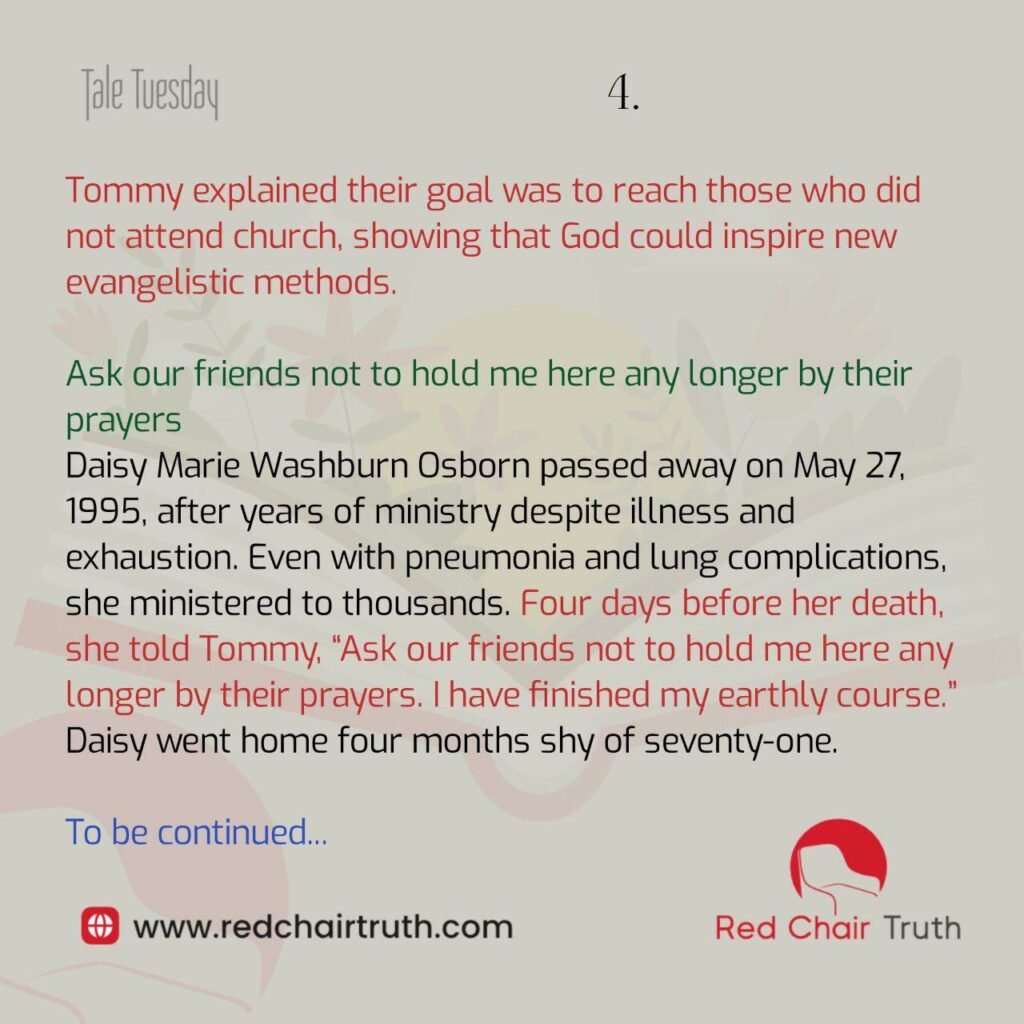
Testimonies soon followed. People accepted Jesus Christ, were delivered from alcohol addiction, healed from cancer, and experienced financial breakthroughs. Tommy explained that their aim was to reach people who would never step into a church, proving that God could inspire new and creative evangelistic methods.
“Ask Our Friends Not to Hold Me Here Any Longer”
Daisy Marie Washburn Osborn passed away on May 27, 1995, after many years of faithful ministry marked by illness and exhaustion. Even while battling pneumonia and lung complications, she continued ministering to thousands of people.
Four days before her death, Daisy spoke quietly to Tommy and said,
“Ask our friends not to hold me here any longer by their prayers. I have finished my earthly course.”
Daisy went home to be with the Lord four months before her seventy-first birthday, leaving behind a legacy of faith, courage, sacrifice, and global impact.
To be continued…
Tale Tuesday 161
Date: 16th December, 2025
Title: : The Osborns (The Pioneers of Mass Miracle Evangelism) part 8
Source: Africa God’s Generals The Soul Winners
Author: Eddie Sempala
Previous post
Next post